
Your Camino Companion Experience
Your personalised Camino Companion is now ready, guiding you each day with everything you need along the way.
 Scan to open your Camino Companions App, no download required
Your Daily Camino Guide
Each day of your journey is delivered through your Camino Companion app, designed to keep everything simple, clear, and accessible while you walk.
Daily Briefing
A clear overview of each day, including distance, terrain, and key highlights.
Route & Navigation
Simple maps showing your start point, end point, and key waypoints along the route.
Support & Logistics
Direct access to support, transport coordination, and daily planning.
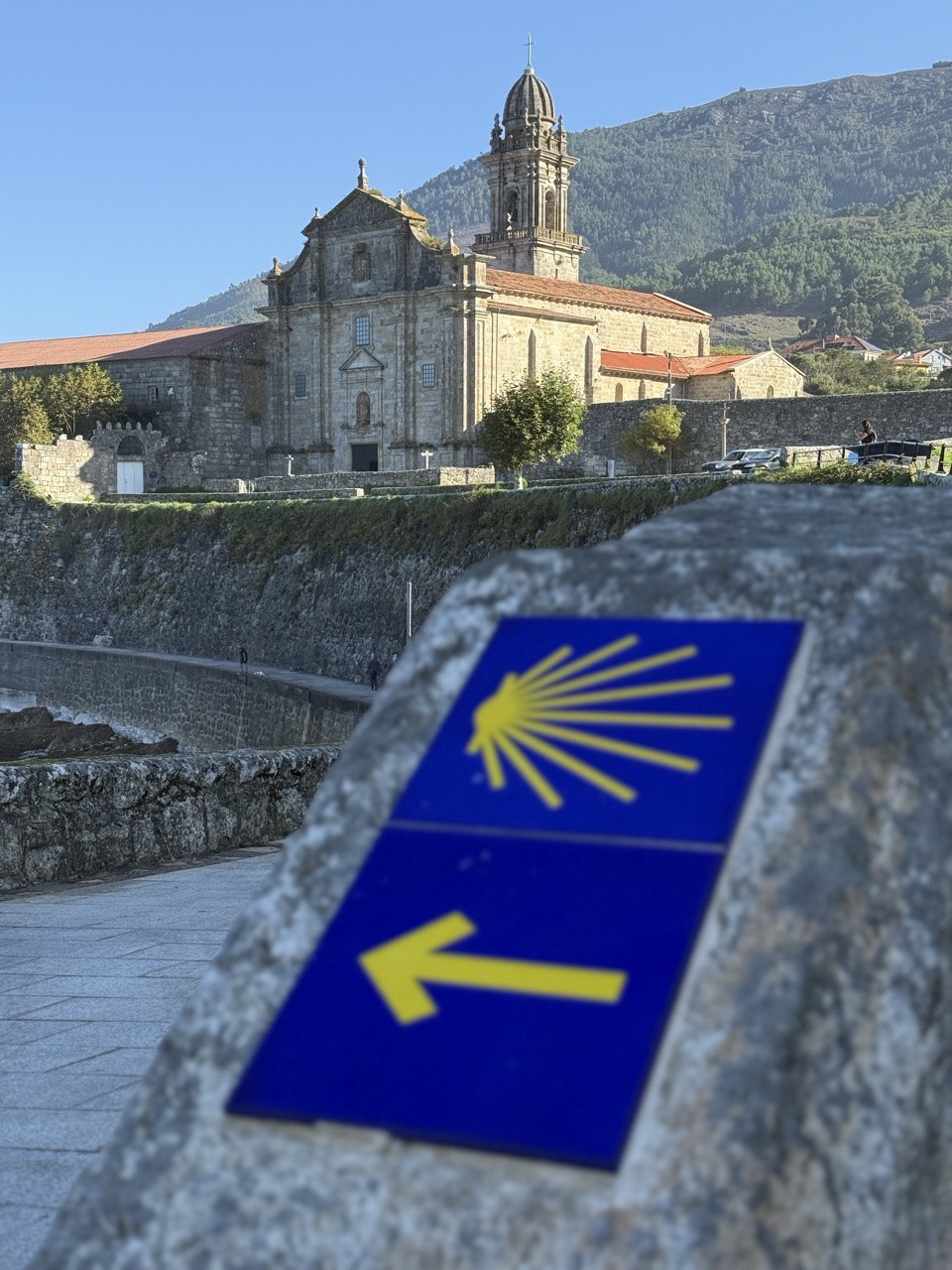
Your Journey Begins in Oia
Your Camino starts in the charming coastal village of Oia, on the Portuguese border. From here, the route winds northward through dramatic Atlantic coastline, lush Galician valleys, and historic towns, all the way to the Cathedral in Santiago de Compostela.
Start walking between 09:30 and 10:00am each morning. Your guide Helder will be with you throughout, and a support vehicle is always nearby.
Your Day-by-Day Itinerary
Your Camino begins with a private transfer from Porto to Oia. The village sits on the Atlantic coast at the Portuguese border and is one of the most dramatic starting points on the entire Camino network. This evening is yours to settle in, rest from travel, and take in the coastal views before the walk begins tomorrow.
Starts at the 12th-century Cistercian Monastery of Santa María de Oia on the ocean’s edge. The route follows the coastal road north or the Estrada Real, passing through quiet lanes, nature trails, small stone houses, and traditional fishing spots. The terrain is flat.
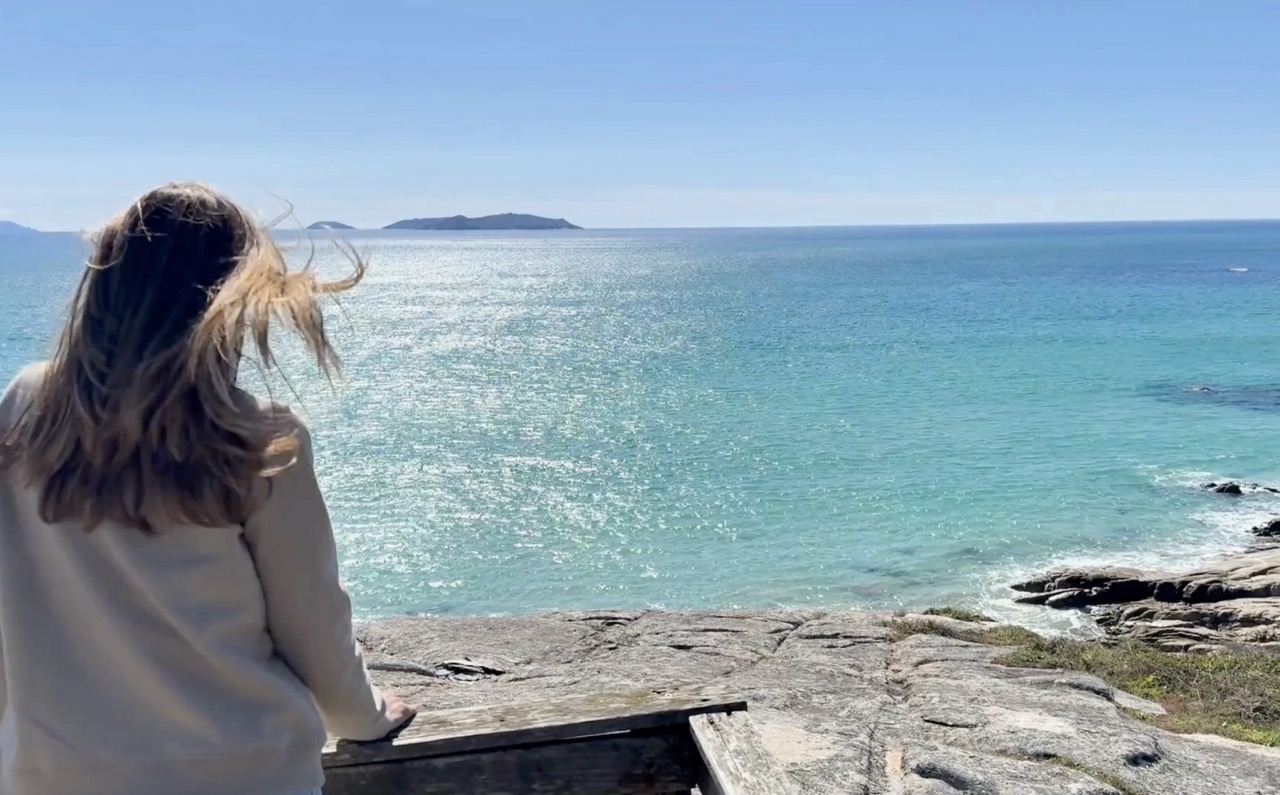
The coast becomes wilder with rocky outcrops. You pass As Mariñas, a rural area with the ocean as a constant companion, then approach Cabo Silleiro, marked by its iconic lighthouse and one of the most dramatic viewpoints on the Coastal Way.
The path descends from the cape along a promenade and scenic road into Baiona. Entering the outskirts, you pass the Virxe da Rocha statue. The landscape softens with sandy beaches and palm trees. The stage ends at the Parador, a historic fortress with panoramic views of the bay and the Cíes Islands.
Coastal walking out of Baiona through Sabarís, then crossing the Miñor River estuary via the historic A Ramallosa Bridge, a major landmark on this stage.
An easy continuation toward Praia América, one of the best-known beaches on this stretch of the coast.
Beach-town promenade and quiet streets through Panxón, including the Votive Temple of the Sea, continuing toward Patos.
A scenic coastal run linking beaches and residential lanes as you approach Vigo’s outer neighbourhoods.
Reaches Samil, Vigo’s most famous beach, with a long and straightforward promenade walk.
Finish at the Museo do Mar de Galicia in Alcabre, set in a former canning-factory site on the waterfront.
Scenic water-path and woodland walking with intermittent urban edges, reaching Rego Fondón and its small waterfall.
Rolling wooded track and rural lanes. You pass the Iglesia de San Andrés de Cedeira, a good place to stamp your pilgrim credential.
A steady descent into Redondela, finishing at Plaza de Rivadavia. This is the point where the Coastal and Central Portuguese routes converge.
The route begins in the heart of Redondela, with the railway viaducts as a backdrop. You leave town via local streets toward the estuary side, with views across the Ría de Vigo toward San Simón and Santo Antón islands.
After Cesantes the path enters the municipality of Soutomaior, mixing rural lanes and dirt tracks. You descend toward the Verdugo River and reach Ponte Sampaio, site of the 1809 battle against Napoleonic troops.
After crossing the bridge, the route climbs gently through woodland paths, quiet lanes, and small villages. You pass through the Bértola area, with fountains and cruceiros.
The path gradually widens, returning to asphalt as you approach Pontevedra. You pass through suburban outskirts and continue toward the station zone.
Final urban walk into the historic center. The stage ends at Praza da Peregrina, home to the Sanctuary of the Virgin Pilgrim, patron of the Portuguese Way in Pontevedra.
- San Simón Island Views: Early estuary views toward San Simón and Santo Antón islands.
- Ponte Sampaio Bridge: Historic bridge crossing and one of the stage’s defining landmarks.
- Praza da Peregrina: Iconic Pontevedra square and home of the Pilgrim Virgin sanctuary.
Leave Pontevedra following the Camino Portugués out of the city. After two miles the Spiritual Variant branches away from the main route toward Poio. The start of the detour is well-marked with a large information board on the left side of the road.
Continue through Poio, passing the Monastery of San Xoán de Poio, a key heritage landmark. The route leads toward Combarro, a standout coastal village known for its traditional granite architecture and seafront hórreos.
Leaving Combarro the Camino turns inland and the main climb begins. This is the most demanding part of the stage, with a sustained uphill route through rural lanes that gradually transition into forested terrain. A steady, consistent pace is recommended.
The final section continues through quiet woodland and countryside. The approach becomes more secluded and atmospheric, culminating at the Monastery of A Armenteira, a 12th-century Cistercian complex set in a tranquil valley.
- Spiritual Variant transition point: The route diverges from the main Portuguese Camino, marking the start of a more remote and reflective section of the journey.
- Monastery of San Xoán de Poio: A significant religious and cultural landmark before reaching the coast.
- Combarro: One of Galicia’s most distinctive coastal villages, known for its preserved historic center and iconic seafront grain stores.
- Sustained ascent to Armenteira: A long and steady climb through increasingly quiet and natural surroundings.
- Monastery of Santa María de A Armenteira: One of the most important sites on the Spiritual Variant, offering a strong sense of arrival after the inland ascent.
The stage begins with a gentle descent from the monastery. Yellow arrows guide pilgrims quickly into the woodland and toward the river trail.
The most iconic stretch of the stage. The route follows the river through shaded forest, passing numerous historic water mills, stone features, and small cascades. Footing can be uneven with roots, stones, and occasional mud, especially after rain.
After the mill route, the path opens into a flatter agricultural landscape with vineyards (D.O. Rías Baixas), orchards, and rural roads as you move through the Ribadumia area.
The Camino continues through quiet rural settlements and transitions toward the estuary. This section is generally easier underfoot and more open than the river trail.
Final stretch into Vilanova de Arousa along the seafront promenade. The route finishes near the maritime station and tourist office area, where pilgrims prepare for the Traslatio boat stage.
- Ruta da Pedra e da Auga: The signature riverside trail of the Spiritual Variant, with historic mills and lush woodland.
- Ribadumia vineyards (Rías Baixas): Scenic rural transition after the river trail.
- Vilanova de Arousa: Gateway to the Traslatio maritime route.
Depart from the maritime station in Vilanova de Arousa and board the boat for the Traslatio journey. The route follows the Ría de Arousa before entering the Río Ulla, retracing the traditional path associated with the arrival of Saint James. Along the way you pass the 17 stone crosses (cruceiros) positioned in the water, marking this historic and symbolic route.
After disembarking at Pontecesures, follow the clearly marked Camino route along the riverbank toward Padrón. This is a flat, short, and straightforward final section, finishing at the Iglesia de Santiago de Padrón, home of the Pedrón stone traditionally linked to the arrival of Saint James.
- The Traslatio: This stage uniquely replaces walking with a historic boat journey, retracing the legendary arrival of Saint James into Galicia by sea and river.
- Ría de Arousa to Río Ulla: Experience the gradual shift from open estuary to inland river, a defining geographical and symbolic feature of the Spiritual Variant.
- The 17 Stone Crosses: Visible from the boat, these cruceiros mark the sacred water route and are among the most recognizable elements of the Traslatio journey.
- Padrón: The stage concludes at one of the most meaningful pilgrimage sites on the Camino, where tradition holds that Saint James first arrived in Galicia.
Start at Iglesia de San Xoán de Calo and head northwest toward the Camino Portugués corridor near A Casalonga. This connector section is local road and village access until you merge into the established pilgrim route.
Once on the Camino corridor, continue through the suburban-rural transition toward O Milladoiro, one of the classic final approach points before Santiago. This section mixes paved stretches with Camino-waymarked paths and gentle gradients.
Leave O Milladoiro on the traditional descent toward Santiago. The route drops toward the city via the Rocha Vella and Conxo approach, transitioning from the outer urban edge into the historic pilgrim entry corridor.
Continue through Conxo and into Santiago’s urban streets, following Camino signage toward the old town. This is the emotional final approach where the route becomes fully city-based and pilgrim traffic increases.
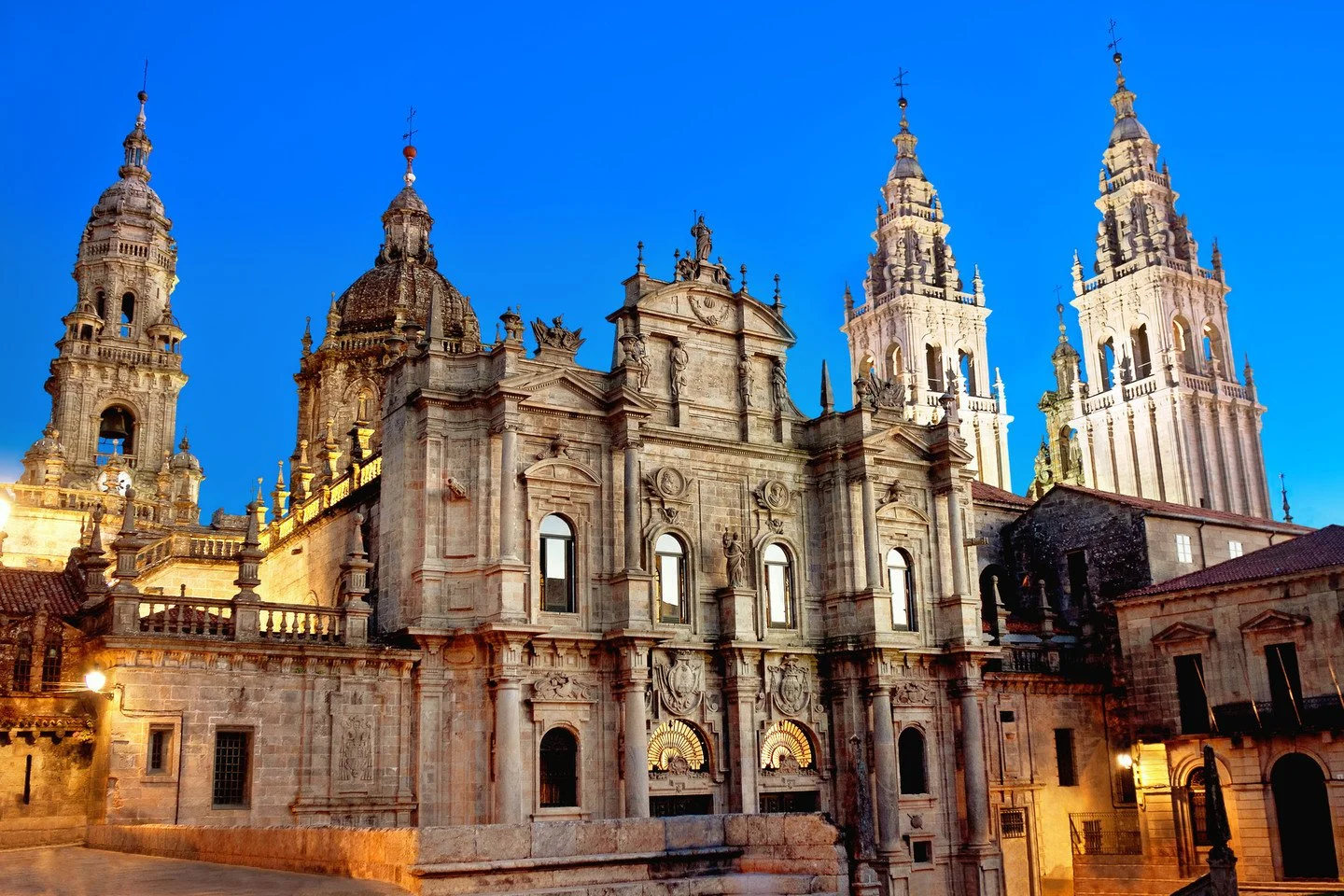
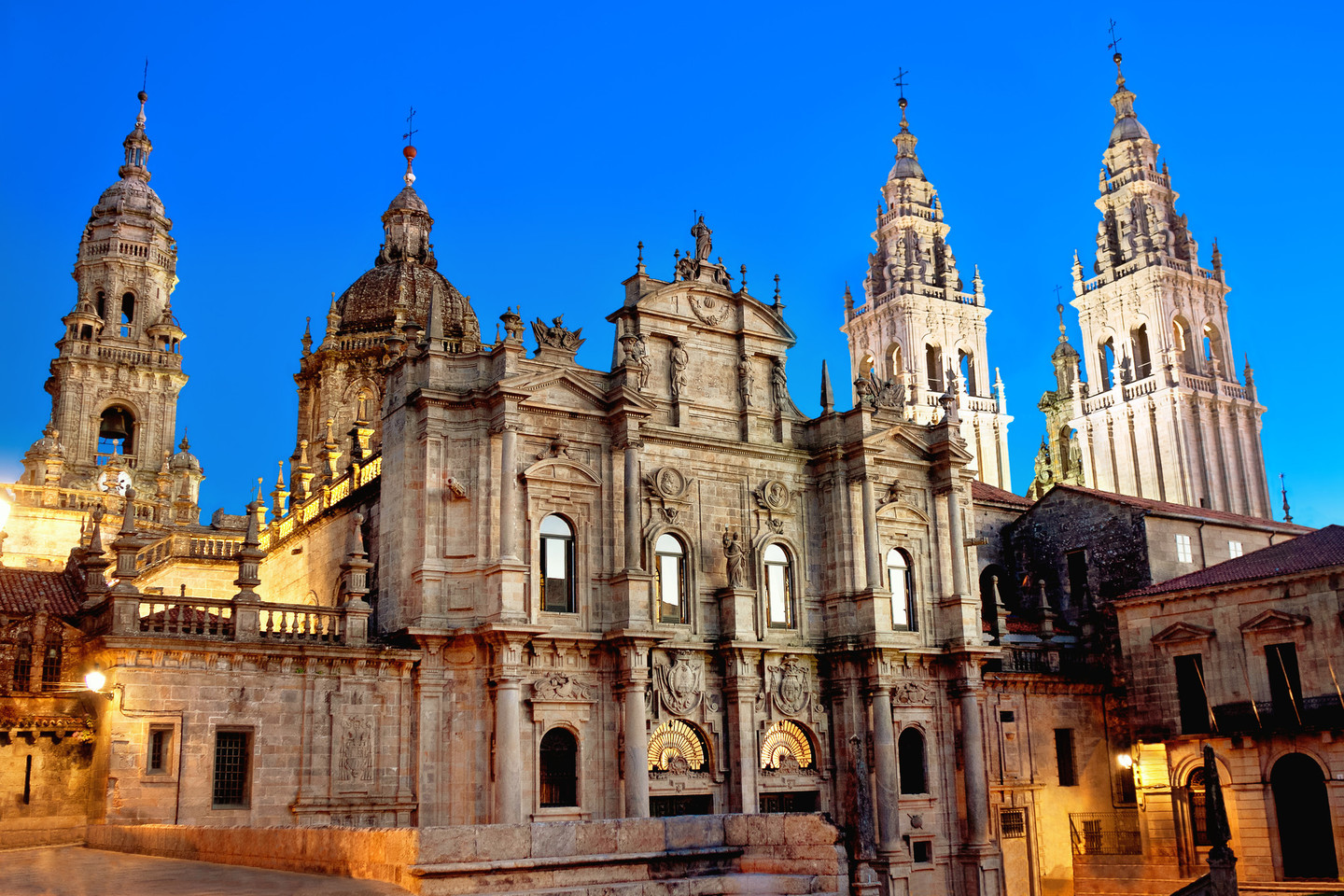
Final stretch through the casco histórico, traditionally passing through Porta Faxeira and Rúa do Franco, finishing at Praza do Obradoiro in front of the Cathedral of Santiago de Compostela.
- Iglesia de San Xoán de Calo: A peaceful local Galician church setting for a more intimate final-day start.
- O Milladoiro: The classic final approach settlement before Santiago and a key emotional milestone for pilgrims.
- Conxo approach: Traditional descent into Santiago through one of the historic southern entry zones.
- Praza do Obradoiro: The final arrival at the Cathedral, framed by the Hostal dos Reis Católicos, Pazo de Raxoi, and the Cathedral façade.
Your Camino concludes in Santiago de Compostela. A morning to rest, reflect, and savour the achievement before your onward travel. Buen Camino, Braund Family.
June / July Weather & Packing Guidance
Galicia | Camino Portugués – Coastal & Spiritual Variant
June / July Weather
Late June and early July are among the finest weeks to walk in Galicia. The landscape is lush and green, days are long, and the weather is at its most settled of the year. Be aware that temperatures under direct sun while walking can feel significantly warmer than the ambient air temperature.
- Daytime temperatures: approx. 24–30°C (75–86°F), occasionally reaching 32°C+ in inland sections
- Mornings & evenings: 15–18°C (59–65°F)
- Rain: less frequent than spring, though brief showers are still possible
- Trails: predominantly dry and firm, with good conditions underfoot
- Sun: strong, high UV levels and long daylight hours mean sun protection is non-negotiable
- Coastal sections benefit from cool Atlantic breezes, but exposed clifftop paths can be very warm
- Please pack SPF 50+ sunscreen, a good sun hat, and UV-protective sunglasses and apply sunscreen before setting out each morning
Walking Clothing & Gear
- Footwear: comfortable, well broken-in walking shoes or trail runners
- Socks: merino wool or moisture-wicking hiking socks
- Base Layers: quick-dry short-sleeved tops (avoid cotton)
- Trousers: lightweight quick-dry walking pants or shorts
- Outerwear: a lightweight waterproof jacket for occasional showers
- Insulation: a thin fleece or light layer for early mornings and evenings
Evenings & Leisure
- Evening Wear: casual yet smart attire for dinners, winery visits, and Michelin-level experiences
- Footwear: comfortable leisure shoes or sandals
- Spa/Wellness: swimwear for hotel spa and pool facilities
- Sun Protection: wide-brim hat, UV sunglasses, and SPF 50+ sunscreen applied daily before walking
Pilgrim Kit
You will each receive a Camino Companions Pilgrim Kit, consisting of:
- A light day pack
- One walking stick
- A poncho
- A refillable water bottle
- Electrolytes
- The Camino Shell
A support vehicle is available throughout the journey. You only need to carry day essentials, and walking distances can always be adjusted.
What’s Included in Your Journey
Your experience has been carefully designed so everything essential is taken care of.
Included
- All meals throughout the journey — daily breakfast, packed lunches on walking days, and curated dinners with supporting wine
- 2 bottles of local wine for dinners, selected by the restaurant or hotel and paired with the meal
- Three 30-minute massage treatments per person
- Two Michelin-level dining experiences
- One winery visit and tasting experience
- One private boat experience to the Cíes Islands
- All accommodation, planned activities, and transfers outlined in this itinerary
- Full support throughout the journey
Incidental Expenses
To maintain flexibility during your stay, any personal or incidental expenses are not included. These can be settled directly with each hotel or venue.
- Mini bar consumption
- Laundry services
- Additional food or beverages outside of arranged meals
- Additional massages or spa treatments
- Extra alcohol consumption beyond what is included with meals
Your Camino Companion Experience
Your personalised Camino Companion is now ready, guiding you each day with everything you need along the way.
 Scan to open your Camino Companion, no download required
Your Daily Camino Guide
Each day of your journey is delivered through your Camino Companion app, designed to keep everything simple, clear, and accessible while you walk.
Daily Briefing
A clear overview of each day, including distance, terrain, and key highlights.
Route & Navigation
Simple maps showing your start point, end point, and key waypoints along the route.
Support & Logistics
Direct access to support, transport coordination, and daily planning.
Your Walking Guide
A printable version of your journey is also available as a complementary reference.
While the printed guide provides a complete overview, your Camino Companion app will remain your primary guide during each day of your journey.
Your Day-by-Day Itinerary
Every detail of your Camino journey, from first steps to final farewell.
To ensure a smooth daily rhythm and allow full enjoyment of all scheduled experiences, it is recommended to begin walking between 09:30 to 10am each morning. This timing provides sufficient margin to complete each stage comfortably, while still allowing time for planned activities, transfers, and dining arrangements.
Your journey begins with a private transfer from The Yeatman Hotel, Porto at 11:30 am. You will be met by André and Julia, who will accompany you on your transfer to your hotel in Oia. This first day is intentionally unstructured, allowing you to settle in and gently transition into the Camino experience. In the evening, you will enjoy a relaxed welcome dinner.
Your first walking day is a gentle introduction to the Camino rhythm. The route follows a dramatic Atlantic coastline, passing beaches, cliffs, and cultivated farmland, with the sound of the ocean accompanying much of the walk. The terrain is varied but approachable, designed to ease you into longer walking days without pressure, arriving at the historic seaside town of Baiona.
The route passes several beaches and offers views of the Cíes Islands at every turn. Most of the route follows green-arrow marked paths, an attractive option due to its minimal elevation changes. A truly scenic and rewarding stage as the journey builds momentum.
After departing Vigo, the Camino quickly softens into rural Galicia. Today’s route winds through eucalyptus forests and quiet countryside, creating a noticeable shift in pace and atmosphere. Many pilgrims describe this stage as a turning point — leaving the city behind and stepping more fully into the interior Camino experience.
Today’s walk follows river paths and historic routes into one of Galicia’s most beautiful old towns. Pontevedra is known for its pedestrian-friendly centre and strong Camino identity. On arrival at your hotel, you will have access to spa and sauna facilities to support recovery.
Today marks your formal transition into the Spiritual Variant of the Camino. The full walking route ascends toward the Monastery of Santa María de Armenteira, a powerful spiritual landmark that signals the beginning of a distinctly different character to the journey — quieter, more contemplative, and deeply immersive.
Today is one of the most visually striking stages of the entire Camino. You will experience the beautiful Ruta da Pedra e da Auga (Path of Stone and Water), following forested trails, streams, waterfalls, and historic mills before arriving at the coast.
This stage follows the historic Traslatio route, retracing the legendary journey of the Apostle Saint James into Galicia. Instead of a full walking day, the route is completed by boat from Vilanova de Arousa, navigating the Ría de Arousa and continuing along the Río Ulla. Stone crosses (cruceiros) line the river, commemorating the apostolic route. The boat arrives in Pontecesures, from where a short walk of approximately 3 km leads to Padrón.
Your final walking day is the most ambitious. The route gradually builds toward Santiago, passing through rural villages and historic sanctuaries. As the Cathedral finally comes into view, the sense of completion is unmistakable. In the evening, you will celebrate your journey with your second Michelin-starred dining experience.
Your Camino concludes in Santiago de Compostela. A morning to rest, reflect, and savour the achievement of completing your journey before your onward travel.
May Weather & Packing Guidance
Galicia | Camino Portugués – Coastal & Spiritual Variant
May Weather
By the second week of May, spring in Galicia is well established. The landscape is at its most vibrant, with lush greenery, wildflowers in bloom, and long daylight hours.
- Daytime temperatures: approx. 18–22°C (64–72°F)
- Mornings & evenings: 10–13°C (50–55°F)
- Rain: still possible, but typically less frequent and more sporadic than April
- Trails: mostly dry and firm, though occasional damp sections remain in shaded areas
- Sun: more consistent; UV levels are higher — sun protection is essential
- Coastal sections benefit from cool Atlantic breezes
Walking Clothing & Gear
- Footwear: comfortable, well broken-in walking shoes or trail runners
- Socks: merino wool or moisture-wicking hiking socks
- Base Layers: quick-dry short and long-sleeved tops (avoid cotton)
- Trousers: quick-dry walking pants; zip-off styles are useful as temperatures rise
- Outerwear: a waterproof rain jacket
- Insulation: a fleece or lightweight jacket for cool mornings
- Spare layers for changing weather
Evenings & Leisure
- Evening Wear: casual yet smart attire for dinners, winery visits, and Michelin-level experiences
- Footwear: comfortable leisure shoes or sandals
- Spa/Wellness: swimwear for hotel spa and sauna facilities
- Sun Protection: hat, sunglasses, and sunscreen — essential in May
Pilgrims Kit
You will each receive a Camino Companions Pilgrim Kit, consisting of:
- A light day pack
- One walking stick
- A poncho
- A cap
- A refillable water bottle
- Electrolytes
- The Camino Shell
A support vehicle is available throughout the journey — you only need to carry day essentials. Walking distances can always be adjusted.
What’s Included in Your Journey
Your experience has been carefully designed so everything essential is taken care of.
Included
- All meals throughout the journey — daily breakfast, packed lunches on walking days, and curated dinners with supporting wine
- 3 bottles of local wine for dinners, selected by the hotel and paired with the meal
- Three 30-minute massage treatments per person
- Two Michelin-level dining experiences
- One winery visit and tasting experience
- One private boat experience to the Cíes Islands
- All accommodation, planned activities, and transfers outlined in this itinerary
- Full support throughout the journey
Incidental Expenses
To maintain flexibility during your stay, any personal or incidental expenses are not included. These can be settled directly with each hotel or venue.
- Mini bar consumption
- Laundry services
- Additional food or beverages outside of arranged meals
- Additional massages or spa treatments
- Extra alcohol consumption beyond what is included with meals